Measuring carbon in coastal ecosystems like seagrass meadows, salt marshes, and kelp forests helps us understand how nature can store carbon and support climate action. This toolkit is designed to guide communities, practitioners, and project teams through the full process — from early planning and project design to field sampling and data analysis. It brings together practical steps, tools, and best practices to help you collect reliable data and make informed decisions. Whether you are starting a new project or strengthening an existing one, this toolkit aims to make carbon measurement more accessible and easier to navigate. It also highlights important considerations such as local conditions, community knowledge and long-term monitoring needs. By supporting consistent and credible approaches, this resource can help projects demonstrate their impact and access funding or carbon finance opportunities. Ultimately, it is intended to support the stewardship and restoration of coastal ecosystems that contribute climate solutions.

What is blue carbon?

Explore educational illustrations that depict the role of carbon in ecosystems





How to plan your carbon measurement project
Before diving into sediment sampling or field surveys, you may need support to design a carbon measurement project that reflects your goals, budget and timeline. WWF-Canada has developed a sampling design guide to assist in project development from start to finish. For a quick overview of the guide, refer to the accompanying video.
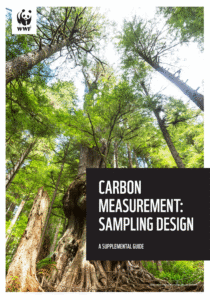
Use these sampling design tools to help when planning a carbon measurement project
WWF-Canada: Excel spreadsheet that helps determine the number of plots needed for your study area
WWF-Canada: Google Earth Engine tool to determine the location of plots when using a random sampling strategy
WWF-Canada: Google Earth Engine tools to determine location of plots when using a composite sampling strategy
WWF-Canada: Google Earth Engine tool to help stratify a study area using a stratified random sampling strategy
WWF-Canada: Google Earth Engine tool to help stratify a study area using an auto-stratification, rather than manual sampling approach
WWF-Canada: Google Earth Engine tool to determine location of plots when using a systematic sampling strategy
Verified Carbon Standard: Module VMD0016 describe methods to stratify a project areas
Verified Carbon Standard: Module VMD0034 describes methods for developing a monitoring plan
UNFCCC: Tool to calculate the number of sample plots for measurements within Afforestation and Restoration (A/R) project activities

Carbon measurement protocols & field data templates
Carbon measurement protocols and field data templates provide step-by-step guidance on how to collect, record, and manage data in a consistent and reliable way. They help ensure that measurements taken in the field can be compared over time, and across to different projects. The standardized protocols and templates below makes it easier to analyze results, report findings, and meet requirements for funding or carbon programs.
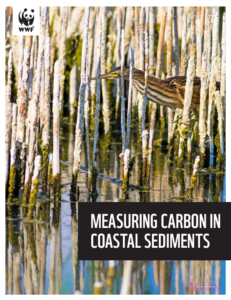
Refer to these guide and video overviews for information on collecting carbon data in the field
The Blue Carbon Initiative: Methods for assessing carbon stocks and emissions factors in mangroves, tidal salt marshes, and seagrass meadows
WWF-Canada: Methods for determining the carbon stock of non-treed vegetation of different ecosystems throughout Canada in guide format
WWF-Canada: Methods for determining the carbon stock of non-treed vegetation of different ecosystems throughout Canada in video format
WWF-Canada: Methods for determining the carbon stock of peat soils throughout Canada in guide format
WWF-Canada: Methods for determining the carbon stock of peat soils throughout Canada in video format
WWF-Canada: Methods for determining the carbon stock of peat soils throughout Canada in guide format
WWF-Canada: Methods for determining the carbon stock of peat soils throughout Canada in video format
Coastal Blue Carbon Community of Practice: A literature review of blue carbon methods in Canadian ecosystems
Refer to these protocols, modules and methods for information on assessing the carbon benefits of projects
Verra | Verified Carbon Standard: Methodology for tidal wetland and seagrass restoration
Verra | Verified Carbon Standard: Methodology for afforestation, reforestation, and revegetation
Verra | Verified Carbon Standard: REDD+ methodology framework
Verra | Verified Carbon Standard: Methods to project future conditions
Verra | Verified Carbon Standard: Agriculture, Forestry, and Other Land Use (AFOLU) non-permanence risk tool
Gold Standard [activity requirement]: Blue carbon and freshwater wetlands
Australian Government: Guide for blue carbon projects registered under the Carbon Credits Methodology Determination 2022
The Nature Conservancy: Scientific best practice guides for land-based blue carbon projects
IPCC: Good practice guidance for land use, land-use change and forestry
IPCC: 2006 IPCC guidelines for national greenhouse gas inventories
IPCC: 2013 supplement to the 2006 IPCC guidelines for national greenhouse gas inventories
Refer to these field data templates to collect data that better supports subsequent data processing steps
WWF-Canada: In-field coastal sediments data sheet
WWF-Canada: In-field soil carbon data sheet
Carbon data processing
Preparing and processing your data can be one of the most challenging parts of the carbon measurement process. The guidance below provides information of both sample preparation and data processing in a lab.
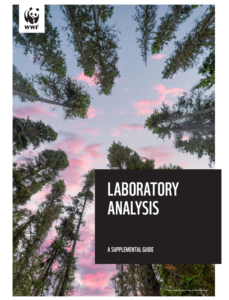
Refer to a selection of laboratories in Canada that are CALA-accredited to support laboratory analysis

Carbon data analysis, interpretation & reporting
Carbon data analysis, interpretation and reporting turn field measurements into meaningful insights about how much carbon an ecosystem is storing or capturing over time. This step involves organizing and analyzing data, checking for accuracy, and explaining what the results mean in a clear and transparent way. Good reporting helps demonstrate project impact, supports decision-making, and can be used to meet requirements for funding or carbon programs.
Use these mathematical calculation tools to support data analysis and interpretation
WWF-Canada: Excel spreadsheet that helps determine the carbon stock of peat soils in your study area
WWF-Canada: Excel spreadsheet that helps determine the carbon stock of above-ground vegetation in your study area
Hengl & MacMillan: Online guide with technical tutorials to support predictive soil mapping for advanced R users
Carbon & marine ecosystem data
Computer-based analyses use tools like satellite imagery, drones, and mapping software to estimate carbon stocks across large coastal areas. These approaches can compliment fieldwork by filling gaps, tracking changes over time, and scaling up results from local sites. They rely on models and spatial data to inform and interpret patterns.
Refer to these databases and datasets for carbon-related data to support blue carbon estimates
Coastal Carbon Network: Explore coastal wetland soil core profile data around the world
Global Carbon Project: A platform to explore and visualize data on carbon fluxes resulting from human activities and natural processes
Hakai Institute: Explore resources and datasets ranging from carbon, to biodiversity to physical marine processes
Smithsonian: Carbon stock and related data for blue carbon ecosystems along the Pacific coast of North America
International Soil Carbon Network: Explore open access, community-drive, global soil carbon data
Blue Carbon Canada: Seabed sediment carbon and priority areas for research and protection on Canada’s continental margin
Blue Carbon Canada: Carbon stock and related data in surficial seabed sediments of the Canadian continental margin
Refer to the following databases and datasets for ecosystem-based data to support blue carbon estimates, and other co-benefits of project implementation
GENERAL
Commission for Environmental Cooperation: Distribution of salt marsh, mangrove and seagrass habitats in North America (2021 release)
Pacific Salmon Foundation: Ecological, environmental, and human use data for the Salish Sea and West Coast Vancouver Island
KELP FORESTS
Hakai Institute: Google Earth Engine tool that showcases annual kelp extent and vegetation density from 1984-2020
Spectral Remote Sensing Laboratory (University of Victoria): Historic kelp baseline data for North Central and South Coast, British Columbia
Fisheries and Oceans Canada: Distribution of kelp beds and other macroalgae in Nova Scotia and southwest New Brunswick (2022-2023)
Fisheries and Oceans Canada: Distribution of macroalgae in the coastal zone of maritime Quebec (2015-2023)
SEAGRASS MEADOWS
Community mapping network: The Eelgrass Bed Mapping Atlas and data entry tools facilitate the management of eelgrass data. Last updated 2015.
Fisheries and Oceans Canada: Distribution of eelgrass in Canada. Data were collected using various techniques and span from 1987 to present.
Fisheries and Oceans Canada: Distribution of eelgrass in the coastal zone of maritime Quebec (2010-2021)
UNEP-WCMC: Global distribution of seagrasses. Last updated 2018.
SALT MARSHES
UNEP-WCMC: Global distribution of salt marhses. Last updated 2024.
Fisheries and Oceans Canada: Distribution of tidal salt marshes in the coastal zone of maritime Quebec (2015-2020)
Blue Carbon Canada: Tidal marsh annual cover maps for the South Coast of British Columbia from 1984 to 2024

Remote sensing & carbon modelling
While a lot of research has going into remote sensing and carbon modelling – including many research papers – there are limited tools available to support the application of remote sensing and carbon modelling to broader audiences, including practitioners.
Below you’ll find a handful of tools that may support remote sensing and carbon modelling endeavours for blue carbon ecosystems
Hakai Institute: Habitat-Mapper is an open-source tool for segmenting geospatial imagery. It automates the detection of coastal species using deep learning, streamlining analysis for drone (RPAS), aerial, and satellite imagery.
NASA: Applied remote sensing training program that guides participants through mapping extent and quantifying carbon stocks of blue carbon ecosystems
The Blue Carbon Initiative: Methods for assessing carbon stocks and emissions factors in mangroves, tidal salt marshes, and seagrass meadows