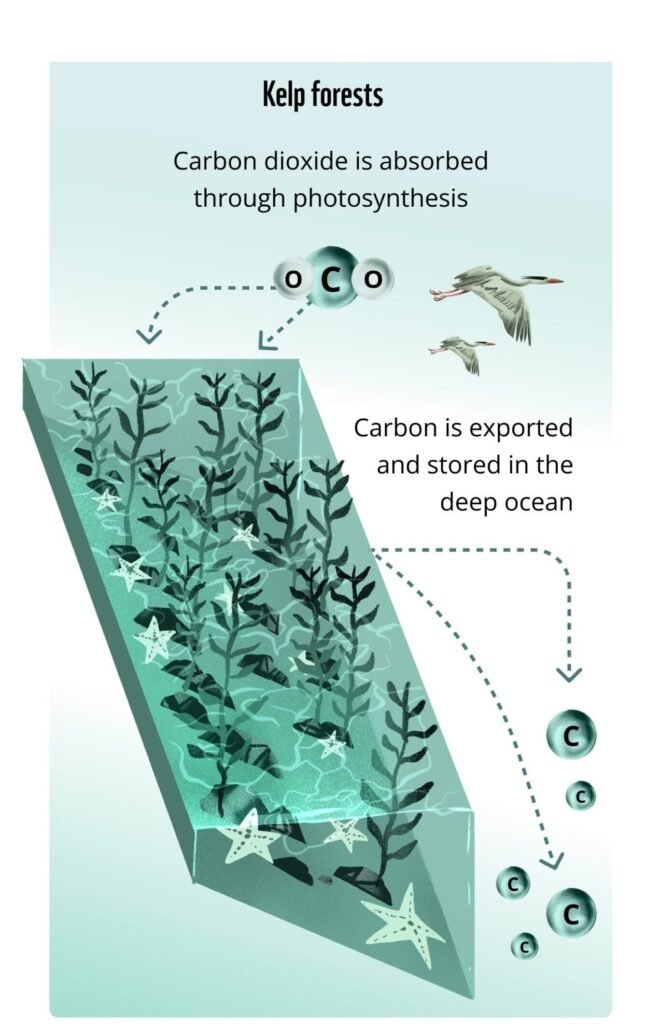
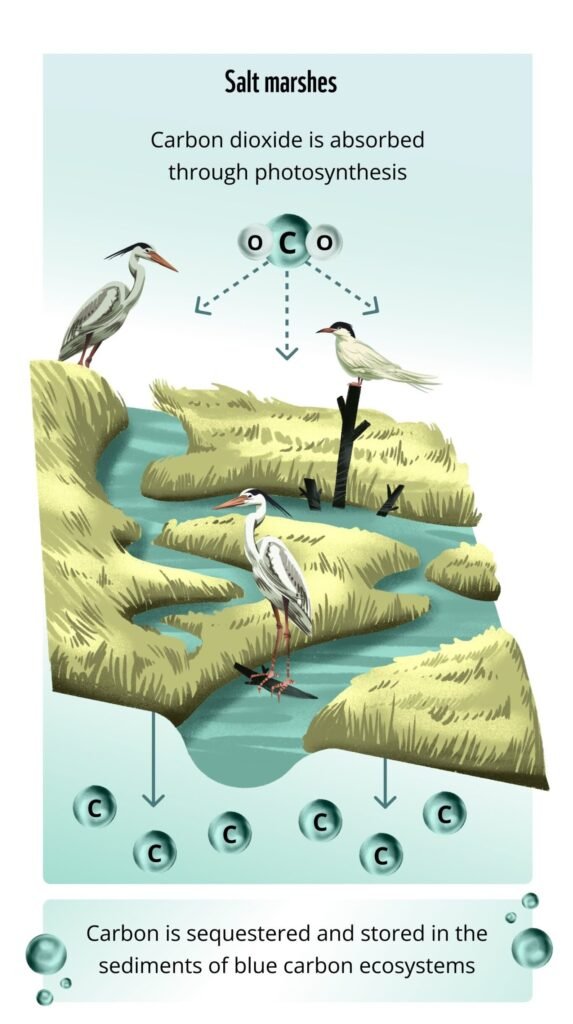
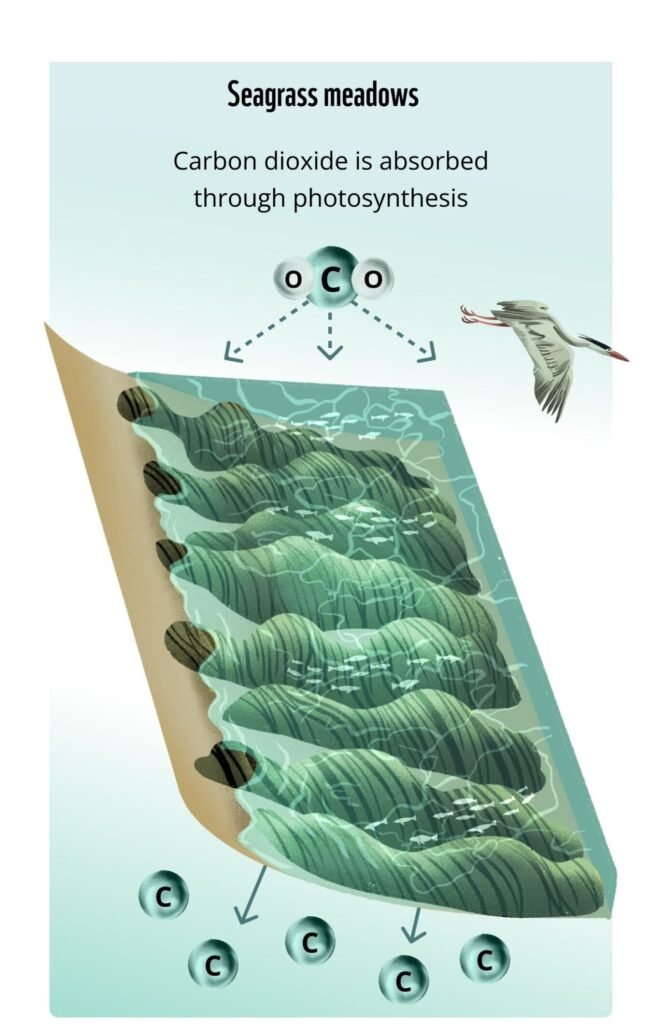
Blue carbon refers to carbon captured and stored by ocean and coastal ecosystems. In habitats like salt marshes and seagrass meadows, plants take up carbon dioxide and store carbon in their biomass and sediments, where it can stay locked away. Kelp forests also uptake carbon, however their role in long-term carbon storage is not localized – carbon export and cycling processes are more complex and are actively being studied.
Although the importance of blue carbon has gained momentum globally, the field is still emerging as an area of research and action in Canada. We are building the national-scale knowledge that is needed to understand these ecosystems, their carbon dynamics, and their role in mitigating and adapting to climate change.
Many coastal habitats have yet to be mapped completely, and major gaps remain regarding our understanding of carbon stocks, accumulation rates, transport processes, greenhouse gas fluxes, and the long term storage role that kelp forests and unvegetated seabeds play across all of Canada’s coasts. Research led by our partners at Blue Carbon Canada is addressing gaps in knowledge by developing a clearer national picture of Canada’s blue carbon ecosystems and their climate mitigation potential.
–— WHAT ARE NATURE-BASED CLIMATE SOLUTIONS?
Working with nature to address climate change
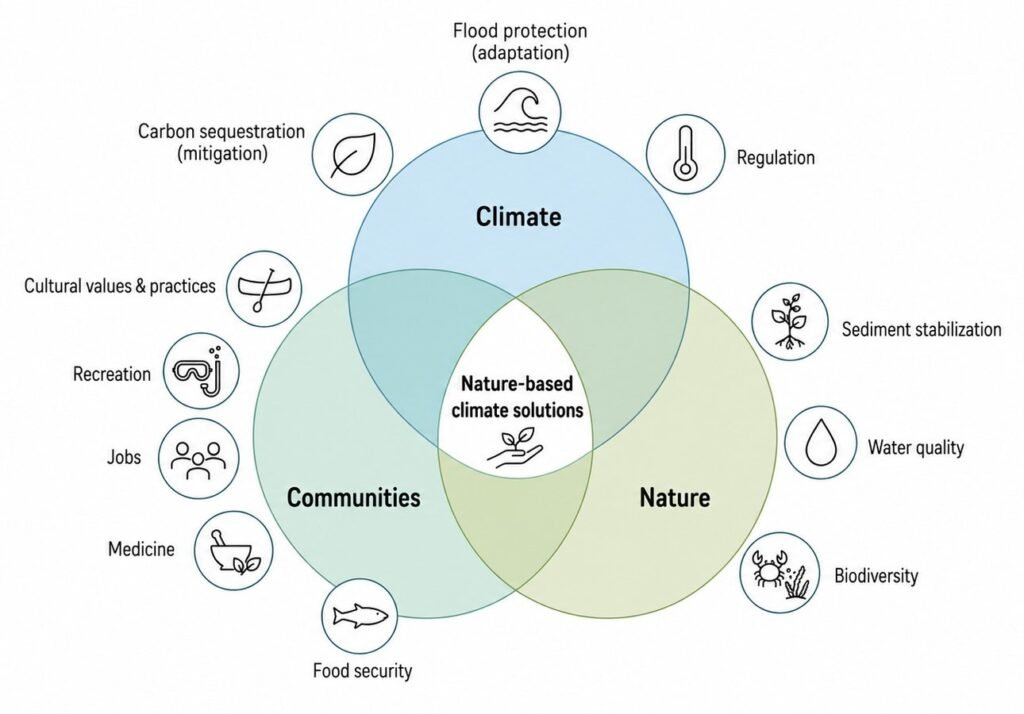
We define coastal nature-based climate solutions (NbCS) as actions that protect, restore, or improve the management of coastal blue carbon ecosystems to address climate change and its impacts, while also supporting biodiversity, community well-being, and cultural values.
–— SUPPORTING NATURE, CLIMATE, & COMMUNITIES
Why coastal habitats matter
Nature
✓ Habitat provision ✓ Nursery habitat for fish and invertebrates ✓ Support for migratory species ✓ Nutrient cycling ✓ Water filtration and purification ✓ Ecosystem resilience ✓ Maintenance of genetic diversity
✓ Cultural values and continuity ✓ Human health and well-being ✓ Economic opportunities ✓ Tourism and recreation ✓ Food systems and resources production
The idea of maintaining healthy natural ecosystems to support human communities is not new.
Indigenous people in Canada and from around the world have been stewarding their lands and waters since time immemorial. Their knowledge and connection to place have allowed them to successfully sustain communities within natural systems.
Many coastal habitats lie within Indigenous territories, therefore Canada must address the rights and title of Indigenous Peoples in order to effectively implement NbCS.
–— CONTACT US
We'd love to hear from you
The Coastal Habitats Hub team includes WWF-Canada, the Hakai Institute, the RAD Network, the EcoFlux Lab at McGill University, and the University of Victoria’s Blue Carbon Canada Program.
The Coastal Habitats Hub is funded in part by Environment and Climate Change Canada.