Atlas of Community-Based Monitoring & Indigenous Knowledge in a Changing Arctic
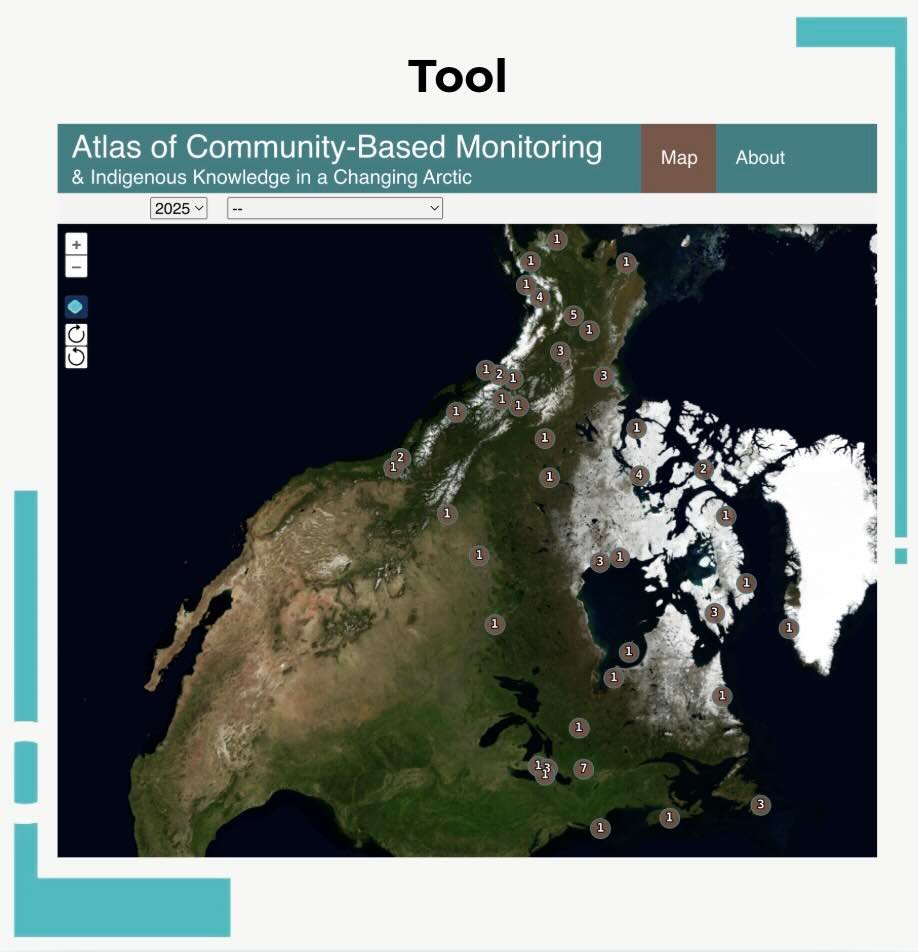
Across the Arctic, communities are initiating and leading community monitoring and observing programs in response to rapid environmental and social change. In spite of significant growth and interest in community-led initiatives and how they contribute to understanding Arctic change, there has been little coordination of initiatives at a circumpolar level. The Atlas of Community-Based Monitoring in a Changing Arctic was initiated to help address this gap. Originally conceived in 2012 as a task of the Sustaining Arctic Observing Networks (SAON), it serves as an inventory of initiatives to assist with network building and identification of best practices and challenges for the field.
Data Collection
The Atlas has been developed over two distinct phases, from 2013 – 2017 (phase 1) and from 2023 – present (phase 2). The projects from the most recent phase are displayed on the home page and the projects from phase 1 are archived and accessible by selecting “all projects” from the drop down menu at the top of the page. Project leads and content partners conducted outreach to CBM initiatives to invite them to join; many provided information directly to the atlas, while in some cases, information was drawn from published articles or information available on the Internet. In these cases, project leads were contacted to request permission to add them to the atlas.
Anticipated benefits of this project include:
Communities involved in monitoring will have an easier time connecting with one another and will have a better sense of how their approaches to monitoring fit within a wider context.
Researchers, funders, and other members of the Arctic monitoring community will better understand the role and potential of community-based monitoring.
The atlas is a collaborative effort that has had many contributors, with leadership from the Inuit Circumpolar Council and the Exchange for Local Observations and Knowledge of the Arctic (ELOKA). The atlas draws on the Nunaliit Atlas Framework hosted by Carleton University’s Geomatics and Cartographic Research Centre.